Spinal Cord Injury Lawyer in Cleveland, OH
A spinal cord injury (SCI) can change everything in a single moment, and the consequences often last a lifetime. Whether the injury came from a crash, a fall, or a workplace incident, the path forward involves long-term medical care, lost income, and major changes for your entire family. Our Cleveland spinal cord injury lawyers handle the legal side so you and your family can focus on what matters most.
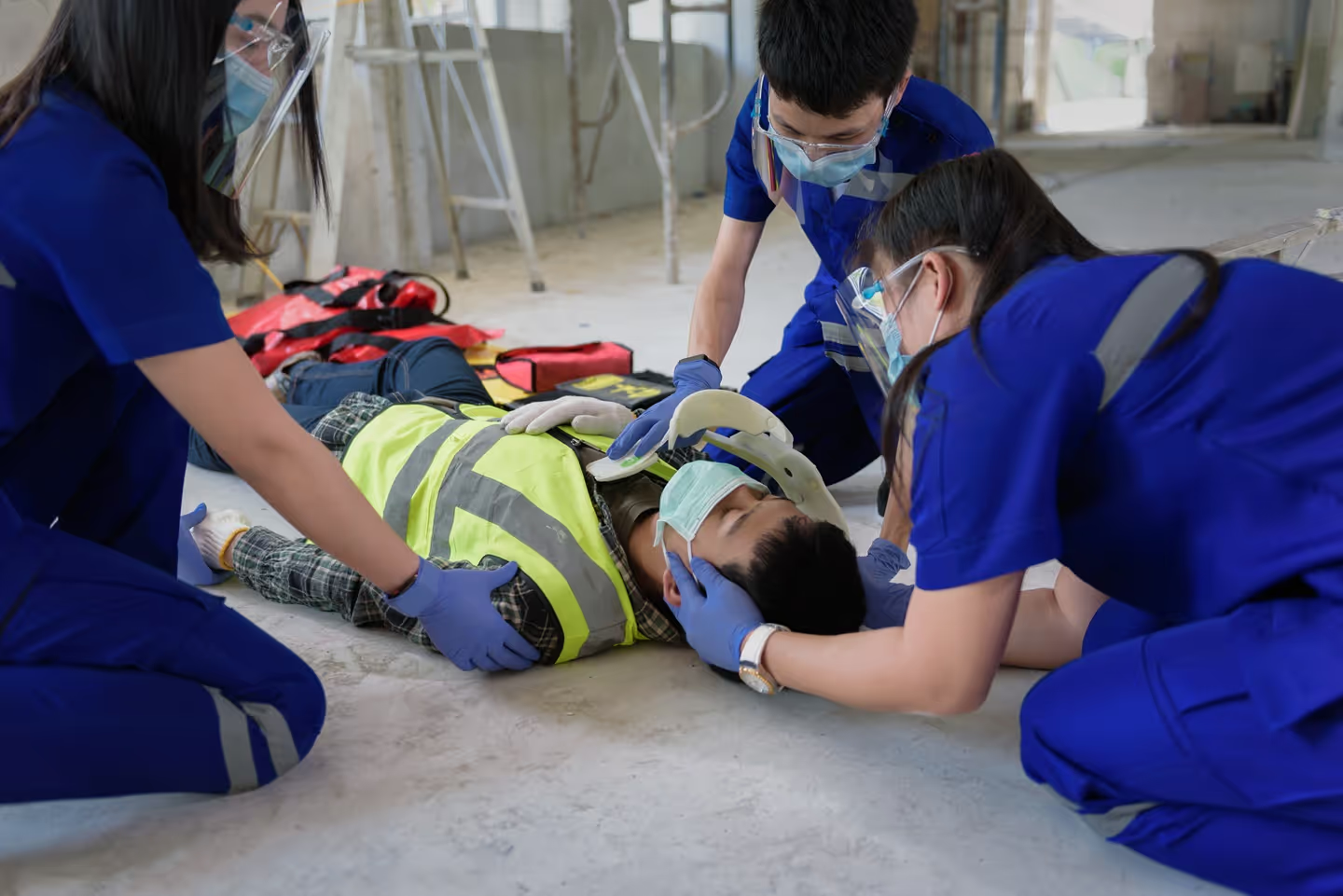
What Is a Spinal Cord Injury?
A spinal cord injury happens when the spinal cord (the bundle of nerves carrying signals between the brain and the rest of the body) is damaged by trauma, disease, or a medical event. According to the National Spinal Cord Injury Statistical Center, roughly 18,000 new traumatic SCI cases occur in the U.S. each year, and an estimated 300,000+ people are living with one today.
SCIs generally fall into two categories:
- Complete: The cord can no longer send signals below the injury site. There is no motor function or sensation below that level, and recovery of function is generally not possible.
- Incomplete: Some signals still pass through the damaged area. Some sensation, motor function, or both may remain, and aggressive rehabilitation sometimes allows additional recovery.
Severity also depends on where on the spine the injury occurs. The higher the damage, the broader the impact. What looks "stable" on day one of a hospital stay can evolve significantly over the weeks and months that follow.
Types of Spinal Cord Injuries
Our Cleveland spinal cord injury lawyers represent clients across the full range of SCI, including:
- Cervical (C1–C7): Affects the arms, hands, trunk, legs, and pelvic organs, and high cervical injuries (C1–C4) can affect breathing and require ventilator support.
- Thoracic (T1–T12): Affects the trunk and legs while typically leaving arm function intact.
- Lumbar (L1–L5): Affects the hips and legs.
- Sacral (S1–S5): Affects the hips, back of the thighs, bowel and bladder function, and sexual function.
- Tetraplegia (quadriplegia): Paralysis of all four limbs and the trunk, typically from a cervical injury.
- Paraplegia: Paralysis of the lower body, typically from a thoracic, lumbar, or sacral injury.
- Central cord syndrome: More impairment in the arms than the legs, often from hyperextension injuries in older adults.
- Anterior cord syndrome: Damage to the front of the cord, often involving loss of motor function and pain/temperature sensation.
- Brown-Séquard syndrome: Damage to one side of the cord, causing weakness on one side and loss of sensation on the other.
- Cauda equina syndrome: Compression of the nerve roots at the base of the spine .
Common Symptoms of a Spinal Cord Injury
Some spinal cord injuries are obvious at the scene. Others develop over hours or days as swelling, bleeding, or secondary damage progresses. Get medical attention immediately if you or a family member has any of these signs after a serious accident:
- Motor: Weakness or paralysis in the arms, legs, or trunk; difficulty walking, standing, or coordinating movement; muscle spasms or exaggerated reflexes.
- Sensory: Numbness, tingling, or loss of feeling below the neck; pressure or stinging sensations along the spine.
- Autonomic: Difficulty breathing or coughing; loss of bowel or bladder control; changes in blood pressure or heart rate.
- Pain: Sharp or radiating pain in the back or neck; severe pressure along the spine.
If you suspect that you or someone else has suffered a spinal cord injury, call 911 and avoid moving the person unless absolutely necessary. Improper movement can make permanent damage worse, and early imaging and stabilization at a Level 1 trauma center can change long-term outcomes.

Not Sure Who's Responsible
or Whether You Even Have a Claim?
Most people don't know their odds of recovering compensation when they first call. That's our job. Tell us what happened. We'll investigate, explain how Ohio law applies, and give you a straight read on where you stand. Contact us today to get started.
What Causes Most Spinal
Cord Injury Claims We Handle
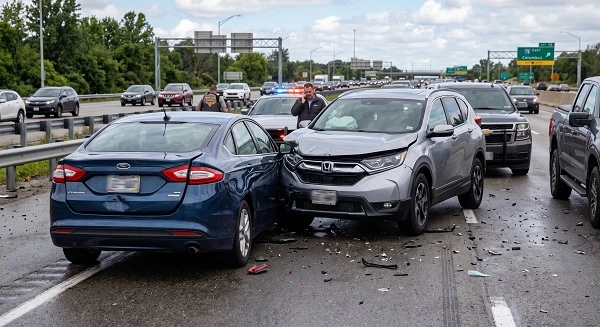
Most of the spinal cord injury claims our firm sees come from preventable accidents where someone else's negligence changed a client's life. Common causes include:
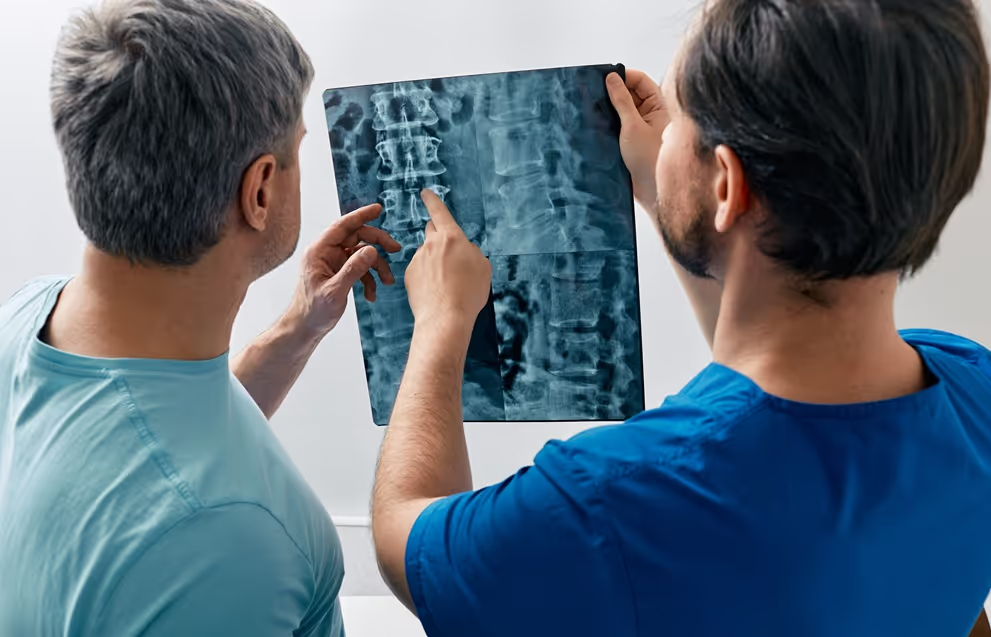
What a Cleveland Spinal Cord Injury Claim May Be Worth
Spinal cord injuries are among the most expensive injuries in personal injury law. Lifetime costs for a serious SCI run upwards of $1 million before lost income, pain and suffering, or the impact on the victim’s family are factored in. Ohio law allows SCI victims to pursue several categories of damages.
Economic Damages
These compensate you for what the injury has cost you financially. They often include:
- Ambulance rides
- ER visits
- Imaging
- Surgeries
- Inpatient hospital stays
- Rehabilitation
- Home modifications
- Lost wages
Non-Economic Damages
These cover what the injury has cost you personally, and in serious SCI cases, this is often where the largest losses live. Non-economic damages may include:
- Pain and suffering
- Emotional distress, anxiety, depression, and PTSD
- Loss of independence
- Loss of enjoyment of life and previous activities
- Permanent disability and disfigurement
- Strain on close personal relationships and loss of consortium
Punitive Damages
Punitive damages may be available when the at-fault party acted with conscious disregard for safety by drunk driving, fleeing the scene, engaging in gross safety violations on a job site, or other intentional misconduct. They're meant to punish rather than compensate, and Ohio caps them based on the underlying compensatory award.
Wrongful Death Damages
Severe spinal cord injuries can be fatal, particularly high cervical injuries that affect breathing. Surviving family members can pursue a wrongful death claim under Ohio Revised Code Chapter 2125 for funeral and burial expenses, lost financial support, loss of companionship, and the emotional impact on the family.
Want to Know How Much You Can Receive
for Your SCI Case?
No two SCI cases are worth the same amount. Value comes from the level of injury, the medical record, available coverage, and the long-term prognosis. A free consultation is the fastest way to see what those add up to for your situation. Reach out to us to get the answers you need to move forward.
What to Do After a Spinal Cord Injury in Cleveland
What happens in the first days and weeks after an SCI shapes both the medical outcome and the case that follows. Where you can, work through the steps below.
- Get to a Level 1 trauma center: Cleveland's facilities at MetroHealth and University Hospitals are equipped to evaluate spinal injuries, and early surgical decompression and stabilization can change long-term outcomes.
- Follow the full treatment plan: Insurance companies treat gaps in care as proof the injury isn't as serious as you're claiming.
- Save every medical record: Imaging, surgical notes, prescriptions, equipment receipts, and out-of-pocket expenses build the damages picture your case will rely on.
- Keep a recovery journal: A few daily notes on pain, mobility, what you couldn't do that you used to, and how the injury is affecting your family. These snapshots are far more useful months later than trying to reconstruct life from memory.
- Gather evidence of how it happened: Scene photos, dashcam or surveillance footage, witness contact info, police and incident reports. Physical evidence disappears fast, and witnesses' memories fade faster.
- Decline to make recorded statements until you talk to a lawyer: Adjusters call within days, sound friendly, and frame it as "just to wrap things up," but the goal is to lock in statements they can use later to minimize the claim.
- Call a Cleveland spinal cord injury lawyer early: SCI cases hinge on life care plans, vocational experts, and future medical projections, and the sooner the right team is in place, the stronger the case becomes.
Ohio Laws That Shape Spinal Cord Injury Claims
A few Ohio rules shape nearly every SCI claim, including how it's filed, when, and what you can recover.
Statute of Limitations
Under Ohio Revised Code §2305.10, most SCI claims must be filed within two years of the date of injury. Medical malpractice claims generally must be brought within one year of when the injury was (or should have been) discovered, wrongful death claims have their own two-year window starting on the date of death, and cases involving government entities can have shorter notice requirements. Once the deadline passes, the court can dismiss your case regardless of its merits.
Modified Comparative Negligence
Ohio follows a modified comparative negligence rule: if you're partly at fault, your compensation is reduced by your share, and if your share exceeds 50%, you can be barred from recovering at all. Insurance companies push this argument hard in SCI cases. Don't assume your case isn't worth pursuing because an adjuster suggested you were partly to blame.
Damages Caps
Ohio caps non-economic damages in most personal injury cases at the greater of $250,000 or three times economic damages, up to $350,000 per plaintiff ($500,000 per occurrence).
For serious SCI cases, the exception matters more than the cap. Ohio removes the cap entirely for catastrophic injuries, including permanent physical deformity, loss of a limb or bodily organ system, or permanent functional injury that prevents independent care. Most paralysis cases fall squarely into that exception, which significantly affects how these cases are valued and negotiated.
Stories from the People We've Represented
What Sets Lowe Trial Lawyers Apart in Spinal Cord Injury Claims?
SCI cases reward preparation and punish shortcuts. The insurance company has its own life care planners, its own doctors, and its own playbook for keeping these settlements low. For nearly 50 years, our firm has matched that effort with our own careful damages modeling, the right medical experts, and the trial readiness to walk away from offers that don't reflect what's been lost.
Where We Represent
Spinal Cord Injury Clients
Our base is in Cleveland, and most of our SCI work comes from Cuyahoga County, but we represent clients across Northeastern Ohio and statewide. Where the injury happened doesn't decide whether we can help. Instead, the strength of the case provides the deciding factor.
- Cleveland (Main Office)5875 Landerbrook Drive, Suite 220, Cleveland, OH 44124
- Youngstown30 N Main Street Hubbard, OH 44425
- Chardon115 Main Street Chardon, OH 44024
- Lorain4789 N. Leavitt Road Suite A1 Lorain, OH 44053


Start Today
With a Free Conversation
A spinal cord injury comes with more than a medical bill. It also comes with lost income, family stress, and an insurance company already building a case against you. None of it should fall on you to figure out alone.
Share a few details below. We'll listen, look at the facts, and tell you straight whether the case is worth pursuing. No fee, no pressure.
FAQs About
Cleveland Spinal Cord Injury Claims
Some cases settle in months; others take a year or more, especially when the injury is severe and when the long-term medical picture is still developing. Settling too early is one of the most expensive mistakes a client can make, because future care costs and lost earning capacity may not yet be clear.
Insurance companies often argue that a new spinal cord injury is just an aggravation of an old problem, but Ohio law holds defendants accountable for the harm they actually caused, including making a pre-existing condition worse. Medical records, imaging, and expert testimony help separate what was there before from what changed after the accident.
Not by itself. Incomplete SCIs can still cause permanent disability, lifelong medical needs, and major changes to work and daily life. What drives case value is the full picture, including function, future care, work capacity, and pain, not the label on the chart.
Yes. When an SCI survivor can't make legal decisions on their own because of a high cervical injury, cognitive impact, or other complication, a family member or court-appointed guardian can pursue the claim on their behalf. We handle the legal mechanics so families can focus on the person who's hurt.


.avif)