What to Do Immediately After a Car Accident in Ohio
A car accident can turn an ordinary Tuesday into a scramble of sirens, insurance forms, and a body that suddenly aches in places it didn't an hour ago. What you do in the first 24 to 48 hours after a crash in Ohio can shape both your recovery and your legal claim, and a misstep can be used against you. Here's what to do after a car accident in Ohio, from the seconds after impact to the point where a car accident lawyer should get involved.
Quick-Reference: Your Car Accident Checklist
If you only have a minute, here's the short version. Each step is covered in more detail below.
- Check for injuries and get to a safe spot.
- Call 911 and get an official crash report.
- Photograph the scene before moving anything.
- Exchange information with every driver and witness.
- See a doctor, even if you feel fine.
- Notify your own insurer, but stick to the facts.
- Save every bill, receipt, and record tied to the crash.
- Talk to an Ohio car accident lawyer before settling anything.

Step 1: Check for Injuries and Move to Safety
Before anything else, check yourself and your passengers for injuries. Adrenaline is a poor judge of pain, so don't assume you're unhurt just because nothing screams at you yet. If your car is drivable and blocking traffic, move it to the shoulder or a nearby lot. If it isn't, turn on your hazard lights and stay put rather than stepping into an active lane. Ohio's roads carry heavy traffic even outside rush hour, and a second collision is one of the most common ways a bad situation becomes worse.
Step 2: Call 911 and Report the Crash to Law Enforcement
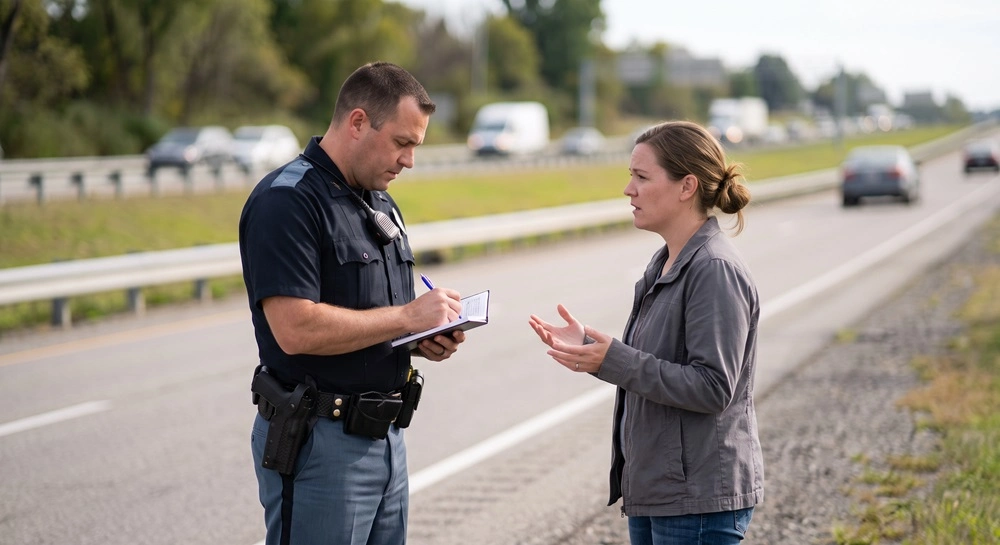
Ohio law requires drivers to report any crash involving injury, death, or $1,000 or more in property damage to police. In practice, that covers nearly every accident worth a phone call. A responding officer creates an official crash report, which becomes one of the most persuasive pieces of evidence in a later injury claim because it documents the scene, the parties involved, and often an initial assessment of fault.
Before the Officer Leaves
- Ask for the report number or the officer's badge number.
- Confirm which police department is handling the report.
- Request a copy of the report once it's filed (most departments post them online within a few days).
If law enforcement doesn't respond to a minor fender-bender, you can typically file a report yourself at a local police station within a few days.
Step 3: Document the Scene Before Anything Changes
Vehicles get towed, skid marks fade, and memories shift within days. What you capture in the minutes after a crash often carries more weight than what anyone remembers weeks later, so treat your phone's camera as one of your most useful tools at the scene.
What to Photograph
- Wide shots of all vehicles involved, from multiple angles;
- Close-ups of the damage to each vehicle;
- License plates and vehicle makes/models;
- The road surface, skid marks, and any debris;
- Traffic signals, signs, or intersections involved;
- Weather and lighting conditions;
- Visible injuries.
What Not to Say
Avoid apologizing, guessing at fault, or offering a play-by-play to the other driver. A casual "I didn't even see you" can end up in a report or recorded statement later, even when you never meant it as an admission. Stick to facts when speaking with police, and save your full account for your own insurer and, eventually, your attorney.
Step 4: Exchange Information with Every Driver and Witness
Get the following from every driver involved, not just the one you believe caused the crash:
Witnesses who saw the crash unfold, but weren't part of it, tend to be far more credible to an insurance company than the drivers involved, and their memory of the event won't improve with time.
Step 5: Get Checked Out by a Doctor, Even If You Feel Fine
Some of the most common car accident injuries don't announce themselves right away. Adrenaline and swelling can mask real damage for hours or even days, including:
- Whiplash and other soft-tissue injuries
- Concussions and mild traumatic brain injuries
- Herniated or bulging discs
- Internal bruising or bleeding
- Spinal cord injuries
Seeing a doctor promptly does two things: it catches injuries early, when treatment tends to work better, and it creates a medical record that ties your condition directly to the crash date. Waiting a week to get checked gives an insurance adjuster an easy argument that something else caused your pain.
Step 6: Report the Crash to Your Insurance Company Carefully
You must notify your own insurer, and doing so quickly helps avoid a coverage dispute down the road. Stick to the basic facts: when, where, and how the crash happened.

What You Don't Have to Do
You are not obligated to give a recorded statement to the other driver's insurance company, and adjusters are trained to ask questions in ways that can later be used to reduce your claim. A few things to keep in mind before you pick up the phone with any insurer:
- You don't have to guess at fault, speculate about injuries, or describe how you're feeling in detail beyond the basic facts.
- You don't have to accept a settlement offer on the spot, even if it's presented as a one-time deal.
- You don't have to sign a medical authorization that gives an insurer broad access to your entire medical history, only what's relevant to the crash.
It's reasonable to speak with an Ohio car accident lawyer before you say anything more than the basics to any insurance representative outside your own.
Step 7: Hold Onto Every Record Tied to the Accident
Small costs are easy to forget individually, but they tend to matter once your case moves toward settlement. Keep a simple folder, physical or digital, for:
- Medical bills and treatment records
- Prescription and pharmacy receipts
- Repair estimates and towing invoices
- Mileage logs for medical appointments
- Pay stubs or documentation of missed work
An organized record speeds up the claims process for everyone involved, including you.
#cta_start
Not Sure Which Bills and Records Your Claim Needs?
A lawyer can tell you what to keep and what an adjuster will ask to see.
#cta_end
Know What Ohio Law Requires and Protects
Ohio's rules covering car accidents aren't always intuitive, and insurance companies count on drivers not knowing them. A few basics shape nearly every claim in the state.
The Two-Year Filing Deadline
Under ORC §2305.10, most car accident injury claims must be filed within 2 years of the crash date. Missing that window can get a case dismissed, no matter how strong the evidence is.
Comparative Negligence Can Reduce Your Recovery
Under Ohio's modified comparative negligence rule, your recovery is reduced by your share of fault if you're found partially responsible for the crash, and you're barred from recovering anything once that share passes 50%. Don't assume you have no case just because an adjuster hints that you share some blame. Fault is rarely as clear-cut as it sounds on the phone, and Ohio still allows recovery as long as your share is 50% or less.
Mandatory Crash Reporting
ORC §4509.74 requires any crash involving injury, death, or at least $1,000 in property damage to be reported to law enforcement.
Ohio saw 255,122 reported crashes in 2025, according to the Ohio State Highway Patrol's crash dashboard, with 6,768 resulting in serious injury or death. The rules above exist because so many drivers end up navigating a claim without knowing them.
When to Call an Ohio Car Accident Lawyer
There's no rule that says you must have a lawyer before you file a claim, but the timing matters more than most people expect. Calling sooner rather than later tends to help when:
- You were seriously hurt or are still undergoing treatment.
- Fault is being disputed or unclear.
- The insurance company's settlement offer feels rushed or low.
- Multiple vehicles or an uninsured driver are involved.
- A loved one was killed in the crash.
The earlier a car accident attorney gets involved, the easier it is to preserve evidence, track down witnesses while memories are fresh, and keep an insurance company from steering the conversation. A short conversation with a Cleveland car accident lawyer costs nothing and can tell you quickly whether your claim needs more support than you can give it alone.
Protect Your Health and Your Claim from the Start
Lowe Trial Lawyers has represented injured drivers across Northeastern Ohio, and we know how fast the first days after a crash move. The choices you make in that window, from the medical care you seek to what you say to an insurer, carry weight for months afterward.
If you're unsure whether your situation calls for a lawyer, that uncertainty alone is worth a conversation, and there's no fee unless we win. Start with a free consultation.

.avif)