Average Car Accident Settlement Amount in Ohio
Rear-end fender-benders on I-90 or a T-bone crash at a Cleveland intersection can settle for a wide range of amounts. What your Ohio car accident claim is worth depends on your injuries, who caused the crash, how much insurance is available, and how well your case gets documented. If you'd rather get a straight answer now, our experienced Cleveland car accident lawyers at our firm can review your case for free.
What Is the Average Car Accident Settlement in Ohio
There's no single number that represents a typical Ohio car accident settlement, but industry data gives a useful benchmark. The Insurance Information Institute reports that the average bodily injury liability claim nationwide is around $26,500, while property damage claims average closer to $6,500.
A separate nationwide survey by Martindale-Nolo Research found that accident victims who responded to the study reported an average settlement of about $23,900, and that figure rose to roughly $29,700 for claims involving physical injuries specifically. Those numbers can be a helpful starting point, but they conflate minor fender-benders with catastrophic collisions. A whiplash claim and a spinal injury claim both count toward the average, which is exactly why your case shouldn't be measured against a nationwide statistic.
What Determines Your Ohio Settlement Value
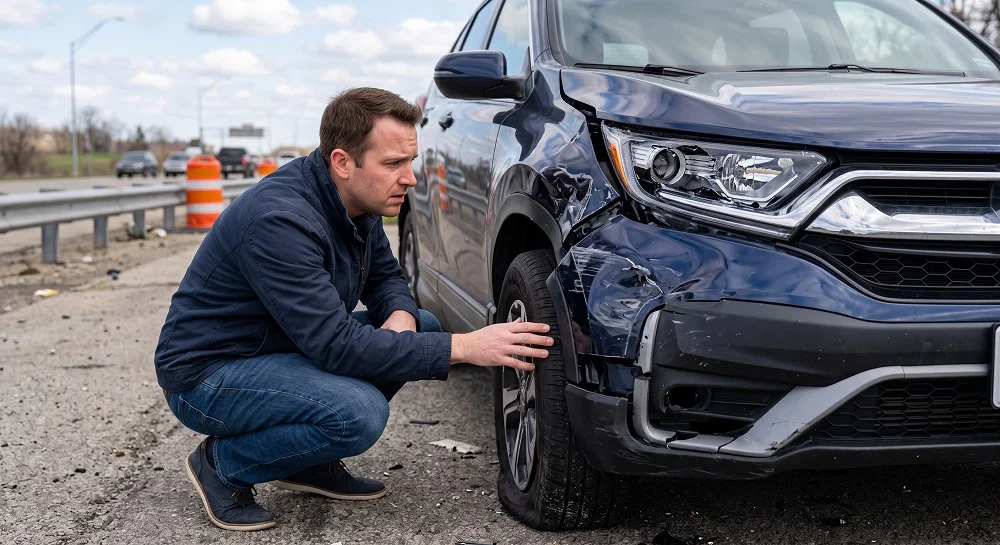
Two Ohio drivers can walk away from similar-looking crashes with very different compensation, because settlement value comes down to a handful of case-specific factors, not a formula.
Injury Severity and Medical Documentation
The more serious and well-documented your injuries are, the more your claim is generally worth. Whiplash and soft-tissue injuries typically settle for less than fractures, herniated discs, or traumatic brain injuries, which require more extensive and expensive treatment. Consistent medical care matters just as much as the diagnosis itself. Gaps in treatment or a delay in seeking care give an insurance adjuster an opening to argue your injuries weren't serious, or weren't caused by the crash at all.
Fault and Ohio's Comparative Negligence Rule
Ohio follows a modified comparative negligence rule, so how fault gets divided directly affects what you can recover. If you share any blame for the crash, your compensation is reduced by your percentage of fault, and if you're found 51% or more responsible, you can't recover anything. Insurance adjusters know this and will look for any reason to shift blame onto you, even for casual remarks made at the scene.
Insurance Coverage Limits
Your settlement can only come from money that's actually available. If the at-fault driver carries Ohio's state minimum coverage and your damages exceed it, their insurer typically won't pay beyond the policy limit, regardless of how strong your case is. That's where your own uninsured/underinsured motorist (UM/UIM) coverage can make a real difference in what you ultimately recover.
How Well Your Claim Is Documented
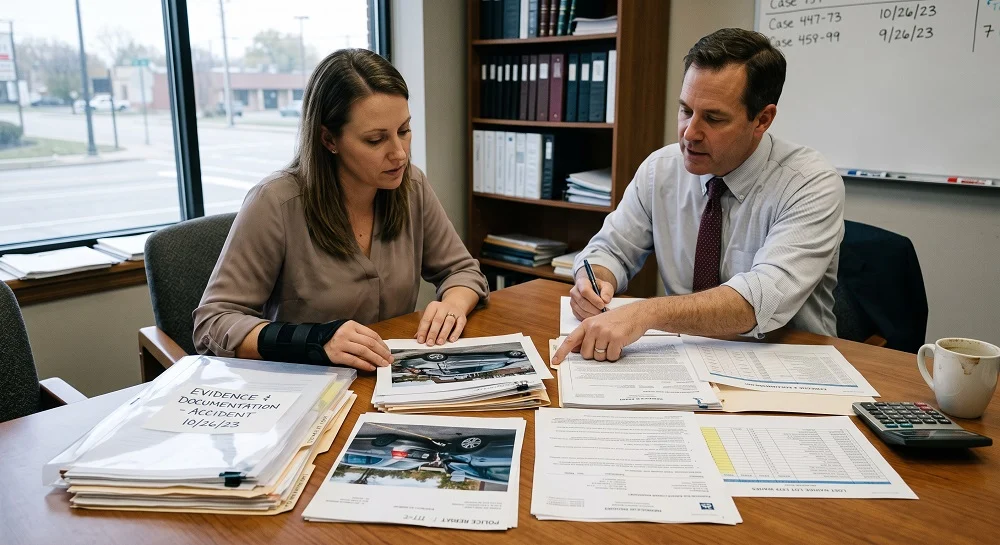
A settlement offer is only as strong as the evidence behind it. Medical records that clearly link your injuries to the crash, wage statements proving lost income, repair estimates, and a clear account of how the injury has affected your daily life all give our skilled attorneys leverage in negotiations. This is often the biggest difference between a lowball offer and a fair one, and it's where having a lawyer build your case from the start tends to pay off.
Economic and Non-Economic Damages in an Ohio Settlement
Ohio law allows accident victims to recover two broad categories of damages, and a fair settlement should account for both.
Economic Damages
Economic damages cover the financial losses you can point to with a bill, receipt, or pay stub. In a car accident claim, these typically include:
- Ambulance transport, emergency room care, and hospital bills
- Surgeries, follow-up visits, physical therapy, and prescriptions
- Anticipated future medical treatment tied to a lasting injury
- Lost wages from time away from work
- Reduced earning capacity if the injury limits your ability to work long-term
- Vehicle repair or replacement costs and rental car expenses
Non-Economic Damages
Non-economic damages cover losses that do not come with a bill or receipt. These may include:
- Physical pain and suffering
- Emotional distress
- Loss of enjoyment of life
- Permanent disfigurement
- Loss of mobility or independence
- Reduced quality of life
Under Ohio Revised Code § 2315.18, non-economic damages (pain and suffering damages) are generally capped at the greater of $250,000 or three times the economic damages, up to $350,000 per plaintiff. The cap may not apply to permanent and substantial deformity, loss of a limb or organ system, or a permanent injury that prevents independent self-care.
#cta_start
Wondering How Ohio's Damages Cap Affects Your Case?
Whether your injuries qualify for the catastrophic injury exception and what your damages actually add up to isn't something a settlement calculator can tell you, so talk to our team for a free review before you accept any offer.
#cta_end
Ohio Laws That Shape Your Settlement
Ohio's accident laws aren't always intuitive, and a few of them have an outsized effect on what a claim is worth.
Ohio Is a Fault-Based State
Unlike no-fault states, Ohio requires the driver who caused the crash to pay for the resulting damages. That means your claim is typically filed against the at-fault driver's insurer, your own coverage, or both, rather than working through a personal injury protection (PIP) insurance system with its own payout limits.
The 51% Comparative Negligence Bar
Under Ohio Revised Code § 2315.33, you can recover compensation as long as you're found 50% or less at fault for the crash, with your award reduced by your share of fault. Cross that 51% threshold, and Ohio law bars recovery entirely, which is why disputes over fault are so heavily contested during negotiations.
Minimum Insurance Requirements
Ohio Revised Code § 4509.51 requires drivers to carry at least $25,000 in bodily injury coverage per person, $50,000 per accident, and $25,000 in property damage coverage. These minimums often fall well short of what a serious crash actually costs, which is why UM/UIM coverage is worth understanding before you ever need it.
Two-Year Statute of Limitations
Ohio Revised Code § 2305.10 gives most car accident victims two years from the date of the crash to file a lawsuit. Settlement negotiations can continue past that point in some cases, but once the deadline passes without a filed claim, you generally lose the legal leverage to pursue compensation at all.
How Long Does It Take to Settle a Car Accident Claim in Ohio
There is no fixed timeline. Most claims involve medical treatment, a demand letter, negotiations, and, if needed, a lawsuit. Clear claims may settle within a few months, while cases involving disputed fault, serious injuries, or litigation can take a year or longer. Settling before treatment is complete can leave future medical costs unpaid, since signing a release usually ends the claim.
Common Mistakes That Can Lower a Settlement
A few avoidable missteps show up again and again in claims that settle for less than they should:
- Accepting the first offer. Initial offers from insurance companies are rarely their best offer.
- Giving a recorded statement to the other driver's insurer. You're not required to, and adjusters are trained to use your own words against you to pay you very little, or even nothing at all.
- Posting about the crash on social media. Even an innocent photo can be used to argue your injuries aren't as serious as claimed.
- Delaying medical treatment. Gaps in care create openings for an insurer to dispute that your injuries came from the crash.
- Settling before treatment is complete. Once you sign a release, you generally can't come back for more if your condition worsens.
Get a Realistic Read on What Your Ohio Claim Is Worth
Averages and settlement ranges can only tell you so much. The real answer depends on your injuries, your evidence, and the insurance available in your specific case, and that's a conversation worth having before you sign anything an insurance company sends you.
Lowe Trial Lawyers has represented injured people across Northeastern Ohio since 1976, and every car accident case we take is on a contingency basis, so there's no fee unless we win. Contact us for a free case review, or call (216) 781-2600.

.avif)